 By Hemlata Soni
 This is one of the most important choices when buying health insurance for a family. Both options cover medical expenses—but the way coverage is structured is completely different.
- Individual plan → separate protection for each person
- Family floater → shared protection for the whole family
So the real question is—do you want guaranteed coverage for each member, or a shared pool that reduces cost?
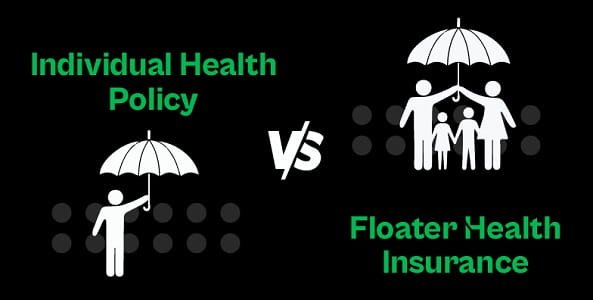
Quick Comparison
| Factor | Family Floater Health Insurance | Individual Health Insurance |
| Coverage | Entire family under one plan | One person per policy |
| Sum Insured | Shared among all members | Separate for each person |
| Premium | Lower (one policy) | Higher (multiple policies) |
| Claim Impact | One claim reduces total cover | No impact on others |
| Policy Management | Single policy | Multiple policies |
| Flexibility | Less personalized | Highly customizable |
| Best For | Young families | Individuals / high-risk members |
What is Family Floater Health Insurance?
A family floater plan covers multiple family members under one policy with a single sum insured.
How it works
Let’s say:
- Sum insured = ₹10 lakh
- Family = 4 members
Anyone in the family can use this ₹10 lakh.
- One person can use full amount
- Or multiple members can use portions
Why people choose floater plans
- Lower premium
- One policy to manage
- Easy to include spouse and children
It’s based on the idea that not everyone falls sick at the same time.
Where it can be risky
If one member uses a large amount, others may be left with less or no coverage.
What is Individual Health Insurance?
An individual health insurance plan covers one person with a dedicated sum insured.
How it works
Each person has:
- Their own policy
- Their own coverage
Example:
- 4 members → 4 policies → each gets ₹5 lakh
If one person uses their cover, it doesn’t affect others.
Why people choose individual plans
- Guaranteed coverage per person
- Better for people with health risks
- No sharing issues
Where it feels expensive
Premium is higher because each person has a separate policy.
Coverage: The Biggest Difference
This is the core difference.
- Individual plan → fixed coverage per person
- Floater plan → shared coverage
So:
- Individual = no compromise
- Floater = shared usage
Cost Comparison
Family floater:
- More affordable
- Single premium covers entire family
Individual:
- More expensive
- Separate premium for each person
In many cases, floater plans can be 40–60% cheaper than individual plans.
Risk Factor
Family floater:
- Risk of exhausting coverage
- One major illness can use up full sum
Individual:
- No sharing risk
- Each person fully protected
So individual plans offer more security.
Claim Impact
Family floater:
- Claim by one member reduces total balance
Individual:
- Claim does not affect others
This is a key decision factor.
Flexibility
Individual plans:
- Custom coverage per person
- Better for different health needs
Family floater:
- Same coverage for all
- Less customization
Premium Calculation
Family floater:
- Based on eldest member’s age
Individual:
- Based on each person’s age and health
So including older parents in a floater plan can increase premium significantly.
Who Should Choose Family Floater?
Family floater is better if:
- Family members are young and healthy
- You want lower premium
- You want simple policy management
- You are covering spouse + kids
Who Should Choose Individual Plans?
Individual plans are better if:
- Family members are older or have health issues
- You want guaranteed coverage for each person
- You want customized plans
- You want no risk of shared limit exhaustion
Real-Life Example
Let’s say a family of 4 has ₹10 lakh cover.
Family Floater
- One member uses ₹8 lakh
- Remaining for others → ₹2 lakh
Individual Plans
- Each person has ₹5 lakh
- One member uses ₹5 lakh
- Others still have full ₹5 lakh each
Smart Strategy (What Experts Suggest)
Many people use a mix:
- Floater plan for young members
- Individual plan for parents
This balances:
- Cost
- Safety
Final Verdict
There is no single “better” option.
- Family Floater → better for affordability & simplicity
- Individual Plan → better for security & full coverage
Simple rule:
- Young, healthy family → choose floater
- Older or high-risk members → choose individual
The best choice depends on your family’s age, health, and budget—not just the premium.