 By Saksham Arora
 Accounting used to be predictable.
Spreadsheets. Manual entries. End-of-month rushes. Long nights double-checking numbers.
But that rhythm is shifting.
Today, artificial intelligence is reshaping how finance teams work—from daily bookkeeping to long-term forecasting. Tasks that once took hours now take minutes. Patterns hidden in massive datasets are now visible. And reports? They’re no longer stuck in the past—they’re happening in real time.
So what does this mean for finance professionals?
Let’s break it down.
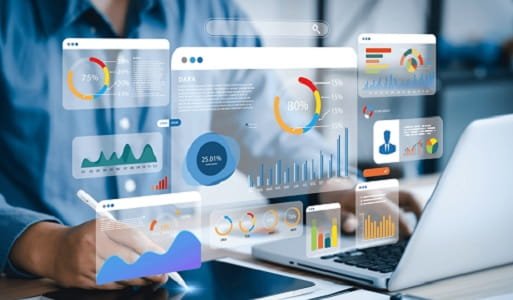
Traditional Accounting vs. AI-Driven Approaches
The Traditional Way
For decades, accounting relied heavily on manual processes and static tools:
- Data entry done by hand
- Periodic reporting (weekly, monthly, quarterly)
- Historical analysis rather than forward-looking insights
- High dependency on human review
It worked. But it was slow. And errors? Inevitable.
Even the most experienced professionals couldn’t completely avoid:
- Miskeyed entries
- Delayed reporting
- Limited forecasting accuracy
The AI-Driven Shift
AI introduces a different way of working.
Instead of reacting to financial data, systems now anticipate it.
Here’s how that changes things:
- Automated data capture from invoices, receipts, and transactions
- Continuous reporting instead of periodic snapshots
- Predictive models that estimate future outcomes
- Real-time anomaly detection
According to research published in the Journal of Emerging Technologies in Accounting, AI systems have reduced manual accounting processing time by up to 40%.
That’s not a small improvement.
That’s a fundamental shift.
Automation in Accounting: Less Manual Work, More Insight
Let’s start with automation.
Because honestly—that’s where most finance teams feel the difference first.
What Gets Automated?
AI tools now handle:
- Invoice processing
- Expense categorization
- Bank reconciliation
- Payroll calculations
- Data extraction from documents
And they do it fast.
More importantly, they do it accurately.
Automated data extraction tools have been shown to reduce entry errors by 30%–50%, based on findings from the same academic research mentioned earlier.
Think about that.
Half the errors—gone.
Why It Matters
Less time fixing mistakes means more time for:
- Analysis
- Strategic planning
- Advisory roles
Finance teams are no longer buried in repetitive work. They’re stepping into decision-making roles.
And that changes the value they bring to an organization.
Predictive Analytics: Forecasting That Actually Looks Forward
Forecasting used to be… cautious.
You’d look at past performance, adjust for known variables, and make an educated guess.
Now?
AI makes those guesses smarter.
How AI Improves Forecasting
Machine learning models analyze:
- Historical financial data
- Market trends
- Customer behavior
- External economic indicators
Then they generate forecasts based on patterns—not assumptions.
According to Deloitte Insights, 62% of financial services firms already use AI for forecasting and planning.
And the results are hard to ignore:
- 15%–25% improvement in forecast accuracy
- Faster adjustments to changing conditions
Beyond Traditional Models
Traditional statistical models follow fixed rules.
AI models? They learn.
Research from Expert Systems with Applications shows that machine learning forecasting models outperform traditional methods by 10%–30% in accuracy.
That’s a big gap.
And it’s growing.
Real-Time Reporting: No More Waiting
Waiting for reports is becoming a thing of the past.
With AI, financial data updates continuously.
What Real-Time Reporting Looks Like
- Dashboards updating instantly
- Live tracking of revenue and expenses
- Immediate alerts for unusual transactions
Instead of asking, “What happened last month?” teams can ask:
“What’s happening right now?”
Faster Decisions
Speed matters.
According to the CFO Signals Survey, companies using advanced analytics report 10%–20% faster decision-making cycles.
That means:
- Faster budget adjustments
- Quicker responses to risks
- More agile financial planning
In finance, timing isn’t everything.
But it’s close.
Key Use Cases of AI in Accounting and Finance
Let’s get practical.
Where exactly is AI being used today?
1. Fraud Detection and Risk Management
AI systems scan transactions for unusual patterns.
Not just obvious ones—subtle ones.
Machine learning models now detect anomalies with over 90% accuracy, according to academic research.
That’s a major upgrade from manual audits.
2. Accounts Payable and Receivable Automation
Invoices are processed automatically.
Payments are matched instantly.
No chasing paperwork.
No delays.
3. Budgeting and Financial Planning
AI tools analyze historical and current data to:
- Suggest budget allocations
- Predict revenue fluctuations
- Highlight potential shortfalls
4. Audit Support
Auditors use AI to:
- Review large datasets quickly
- Identify inconsistencies
- Focus on high-risk areas
Less sampling. More coverage.
5. Cash Flow Forecasting
Cash flow is critical.
AI models track inflows and outflows in real time, helping businesses avoid liquidity issues before they arise.
Efficiency Gains and Accuracy Improvements
Let’s talk numbers.
Because they matter.
Efficiency Gains
According to PwC:
- Financial institutions report up to 30% efficiency gains in back-office operations
- AI could contribute $1.2 trillion in value to financial services by 2030
That’s not incremental growth.
That’s massive.
Cost Reduction
Early adopters of AI in finance have seen:
- 20%–30% reduction in operational costs (Deloitte Insights)
Lower costs. Higher output.
Accuracy Improvements
AI reduces human error and improves consistency:
- Forecasting errors reduced by 20%–50% in financial modeling
- Time-series models cut prediction error rates by up to 25%
Better data leads to better decisions.
Simple as that.
Adoption Trends: Where the Industry Stands
AI adoption isn’t theoretical anymore.
It’s happening.
Right now.
According to the State of AI in Accounting 2026, finance teams are actively exploring how AI fits into their workflows.
In fact, surveys indicate tha 63% exploring AI tools are already testing or evaluating AI-driven solutions for accounting tasks.
And leadership is on board.
- 70% of CFOs plan to increase investment in AI and automation
- Nearly half of finance leaders already use predictive analytics
This isn’t early adoption anymore.
It’s momentum.
Challenges Worth Noting
AI isn’t perfect.
Let’s be honest.
Data Quality Issues
AI systems rely on clean data.
If your data is messy, your insights will be too.
Skill Gaps
Finance professionals need to understand:
- Data interpretation
- AI outputs
- System limitations
That requires training.
Trust and Oversight
Can you fully trust AI decisions?
Not yet.
Human oversight still matters—especially for high-stakes financial decisions.
The Future of Accounting and Financial Forecasting
So where is all this heading?
Short answer: deeper integration.
What to Expect
- More intuitive AI tools requiring less technical knowledge
- Greater use of hybrid models combining human expertise with machine learning
- Expansion of real-time financial ecosystems across organizations
And perhaps most interesting:
Finance professionals will spend less time preparing data…
…and more time interpreting it.
A Shift in Roles
Accountants are becoming:
- Advisors
- Analysts
- Strategists
Not just record-keepers.
That shift is already underway.
Conclusion
AI is changing how accounting and financial forecasting are done—quietly but steadily.
Manual processes are being replaced with automation. Forecasts are becoming more accurate thanks to predictive models. Reporting is no longer delayed—it’s happening in real time.
The benefits are clear:
- Faster processes
- Lower costs
- Better accuracy
- Smarter decisions
At the same time, challenges like data quality and skill gaps still need attention.
But one thing is certain.
Finance is no longer just about tracking what happened.
It’s about understanding what’s happening—and what’s coming next.
And AI is helping make that possible.