 By Saksham Arora
 Hindustan Petroleum Corporation Limited (HPCL) is one of India’s leading public sector oil and gas companies operating a widespread network of fuel retail outlets across the country. An HP petrol pump franchise (officially called a dealership) allows entrepreneurs to sell petrol, diesel, lubricants and value-added services under the HPCL brand. With strong fuel demand, rising motorisation and expanding highway and urban traffic in India, owning an HP petrol pump is seen as a potential long-term business opportunity. This article explains the franchise model, investment costs, cost breakdown, land and space requirements, profitability, operational aspects and steps to open an HP petrol pump dealership in India.
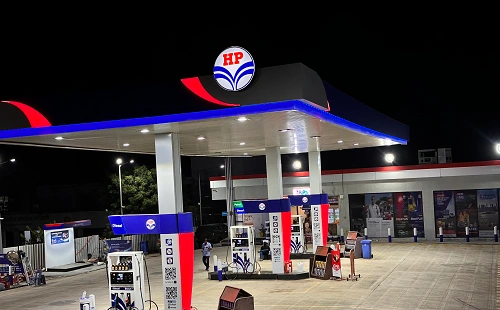
About the HP Petrol Pump Brand
HP Petrol Pump outlets retail HPCL’s portfolio of petrol, diesel and blended fuels, along with ancillary offerings such as lubricants, convenience stores, vehicle services and sometimes CNG or EV charging. The HPCL brand has extensive national reach, regular promotional campaigns and recognised consumer trust. Franchise partners adhere to HPCL’s operating standards, safety norms, retail pricing mechanisms and service guidelines to deliver a consistent fuel retail experience across all outlets.
Is HPCL a Franchise or Dealership Model in India?
HP petrol pumps operate under a dealership model rather than a traditional franchise. In this model, the retail outlet is owned and operated by the franchise partner (dealer) who enters into a dealership agreement with HPCL. The dealer handles daily operations, fuel sales, staff management, compliance with environmental and safety standards, and local marketing, while HPCL supplies fuel, brand assets and operational protocols.
Dealership formats generally fall into:
- Rural Retail Outlet – serves non-urban areas with lower traffic volumes
- Regular/Urban Retail Outlet – positioned in cities or busy towns
- Highway/Strategic Retail Outlet – located on national or state highways with heavy vehicle traffic
All sites must comply with HPCL’s safety requirements, licensing, explosive storage norms and environmental regulations typical for petroleum stations.
Total HP Petrol Pump Franchise Investment Cost in India
The cost of establishing an HP petrol pump dealership varies widely based on location, land cost, infrastructure, licensing and working capital. It is a capital-intensive business with major investment components.
Typical investment brackets in 2025 include:
- Rural Retail Outlet: ₹25 lakh – ₹50 lakh or more depending on land and setup
- Regular Urban Retail Outlet: ₹1 crore – ₹3 crore+ depending on plot cost, infrastructure and regulatory permits
- Highway/Strategic Outlet: ₹2 crore – ₹5 crore+ in strategic high-traffic locations
If the entrepreneur already owns suitable land, the investment burden is lower, focused primarily on infrastructure, tanks, pumps, safety systems and working capital. In contrast, acquiring land in urban or highway locations significantly increases total capital needs.
HP Petrol Pump Cost Breakdown
A typical investment breakdown for an HP petrol pump dealership may include:
- Application & Processing Fees: Nominal charges for applying to HPCL
- Land Acquisition or Lease: Cost depends on location and size (often the largest expense)
- Fuel Tanks & Pump Infrastructure: Fuel tanks, underground piping, fuel dispensers and canopy creation
- Safety Infrastructure: Fire safety systems, spill containment, PESO and environmental compliance
- Convenience Store & Ancillary Services: Optional retail outlet build-out, signage, lighting and POS systems
- Working Capital: Fuel stock, lubricant inventory, staff salaries and utilities
- Licensing & Regulatory Costs: PESO license, fire clearance, municipal trade licence and other required approvals
Because location and land are significant cost drivers, total capital can range from a few tens of lakhs in rural settings to several crores for urban and highway pump installations.
Space & Location Requirements
HPCL mandates specific minimum land size and location requirements depending on the site category:
- Urban Retail Outlets: typically require around 800 square metres of land
- Highway/Rural Outlets: minimum around 1,200 square metres or more
The land can be owned or secured via long-term lease arrangements. Ideal locations include busy city intersections, arterial roads, state and national highways, logistics hubs and areas with high vehicle density where fuel throughput is expected to be strong.
Profit Margin & ROI for HP Petrol Pump Franchise
Profitability of an HP petrol pump dealership depends on sales volume, commission structure and additional services offered.
Typical profitability considerations:
- Fuel Commission: Dealers earn a commission per litre sold; current norms suggest commissions in the range of a few rupees per litre on petrol and diesel
- Additional Revenue Streams: Lubricant sales, convenience store earnings, car wash services, air/water services, EV charging and other retail services help diversify income
- Monthly Revenue Potential: Varies by location — busy highway sites typically see higher throughput than rural sites
- ROI Timeline: With strong traffic and disciplined cost management, dealers may expect to reach break-even in 3 to 5 years or longer depending on capital structure, land cost and fuel sales volume
Because fuel pricing is regulated and margins per litre are limited, non-fuel services and high throughput are critical for higher profitability.
Royalty & Ongoing Charges
Franchise partners are responsible for:
- Fuel procurement & working capital costs
- Rent or lease payments for land
- Staff salaries and training
- Utilities, insurance and safety compliance costs
- License renewals and statutory fees
There is no traditional franchise royalty as in some other business models; rather, earnings are driven by fuel sales commissions and ancillary services.
Support Provided by HPCL
HPCL offers support to approved dealers including:
- Brand usage rights and marketing assets
- Fuel supply scheduling and logistics coordination
- Operational standards and safety guidelines
- Training and onboarding support
- Technical assistance for retail systems and compliance
This ensures dealers can operate to consistent quality standards expected by customers.
Who Should Invest in an HP Petrol Pump Franchise?
Potential investors include:
- Entrepreneurs with significant capital capacity (often ₹1 crore to ₹5 crore+)
- Individuals with access to suitable land or ability to secure long-term lease
- Investors interested in retailing fuel and ancillary automotive services
- Operators looking for steady, traffic-driven businesses with multiple revenue streams
Given the capital intensity and regulatory complexity, focus on strong location analysis, traffic assessment and financial planning is essential.
Risks & Challenges
- High initial investment and regulatory compliance costs
- Limited per-litre margins on fuel
- Dependence on vehicle traffic volumes
- Safety and environmental regulation compliance
- Competition from neighbouring fuel stations
Despite challenges, strong fuel demand and supplementary services can contribute to long-term viability.
How to Apply for an HP Petrol Pump Franchise
- Monitor HPCL dealership advertisements and notifications for your desired location category
- Prepare your financial and business profile to demonstrate investment capability
- Identify and secure suitable land with required dimensions and access
- Submit application forms with supporting documents to HPCL
- Undergo selection processes, site evaluation and documentation review
- Obtain clearances (PESO, fire, environmental, municipal trade licence)
- Sign dealership agreement and commence infrastructure setup
- Launch operations with HPCL support on retail systems and fuel logistics
Successful launches require detailed planning, compliance with safety norms and adherence to HPCL’s operating procedures.
Conclusion
An HP petrol pump franchise represents a capital-intensive but potentially rewarding business opportunity in India’s growing fuel retail sector. With investment typically ranging from ₹25 lakh in rural areas to ₹2 crore – ₹5 crore+ in urban/highway sites depending on land and infrastructure costs, entrepreneurs can build a fuel retail business backed by a recognised national brand. Strong site selection, diversified revenue streams and efficient operations are key to long-term profitability in this domain.