 By Hemlata Soni
 When you buy car insurance, this is the first real choice you face. Both options are valid, but they serve very different purposes.
- Third party insurance = basic, legally required cover
- Comprehensive insurance = full protection for you and others
So the decision is simple—do you want minimum compliance or complete safety?
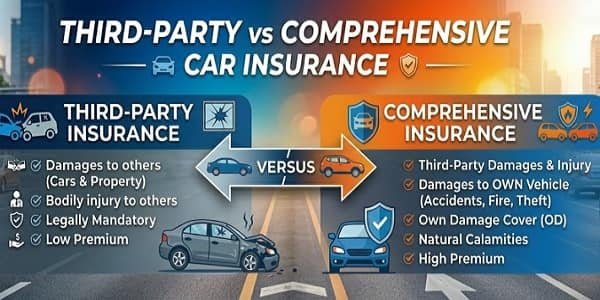
Quick Comparison
| Factor | Comprehensive Insurance | Third Party Insurance |
| Coverage | Own damage + third party | Third party only |
| Legal Requirement | Optional | Mandatory in India |
| Damage to Your Car | Covered | Not covered |
| Damage to Others | Covered | Covered |
| Theft/Fire/Natural Disaster | Covered | Not covered |
| Premium | Higher | Lower |
| Add-ons | Available | Not available |
| Protection Level | Full | Basic |
What is Third Party Car Insurance?
Third party insurance is the minimum insurance required by law in India.
It protects other people, not you.
How it works
If your car causes:
- Injury to someone
- Damage to another vehicle or property
Then the insurance company pays for that loss.
What it does NOT cover
- Your own car damage
- Your own injuries
- Theft or natural disasters
Why it exists
It ensures that victims of accidents get compensation—even if the driver cannot pay.
What is Comprehensive Car Insurance?
Comprehensive insurance gives complete coverage.
It protects both:
- You (your car)
- Others (third party)
How it works
It covers:
- Accidents (own damage + third party)
- Theft
- Fire
- Natural disasters (flood, cyclone, etc.)
Extra benefits
You can also add features like:
- Zero depreciation cover
- Engine protection
- Roadside assistance
- Return to invoice
Coverage: The Biggest Difference
Third Party Insurance:
- Covers only others
Comprehensive Insurance:
- Covers you + others
So if your car gets damaged:
- Third party → you pay
- Comprehensive → insurer pays
Cost Difference
Third party insurance:
- Very cheap
- Premium fixed by regulator
Comprehensive insurance:
- Higher premium
- Depends on car value, location, add-ons
So you pay more—but get much wider protection.
Risk Perspective
Third party insurance:
- Protects you legally
- Leaves your own car unprotected
Comprehensive insurance:
- Protects your finances
- Covers most real-world risks
Real-Life Example
Let’s say you hit another car.
With Third Party Insurance
- Other car damage → covered
- Your car damage → not covered
You pay repair cost yourself.
With Comprehensive Insurance
- Other car damage → covered
- Your car damage → also covered
You’re protected on both sides.
Add-ons (Only in Comprehensive)
Comprehensive plans allow customization:
- Zero Depreciation → full claim without deduction
- Engine Cover → useful in floods
- Roadside Assistance → help during breakdown
These make a big difference in real situations.
Who Should Choose Third Party Insurance?
Third party insurance is enough if:
- Your car is very old
- You rarely use your vehicle
- You want minimum legal coverage
- You are on a tight budget
Who Should Choose Comprehensive Insurance?
Comprehensive insurance is better if:
- Your car is new or expensive
- You drive regularly
- You want full financial protection
- You want peace of mind
Common Mistake
Many people choose third party insurance to save money.
But one accident or theft can cost much more than the premium saved.
Final Verdict
If you want minimum legal protection, third party insurance is enough.
If you want complete protection for your car and finances, comprehensive insurance is the better choice.
For most car owners—especially with new vehicles—comprehensive insurance is the smarter and safer option.
Because when something goes wrong, partial protection usually isn’t enough.